Happy Monday!
Most healthcare founders will quietly admit something when you get them alone:
“I don’t really understand what AI is.”
That’s not ignorance. That’s honesty. And it’s more common than you think.
So let’s fix it — in less time than it takes to finish your coffee.
First: What AI Actually Is
AI is not magic. It’s not sentient. It’s not coming for your job.
It’s software that spots patterns, understands language, and makes predictions — trained on enormous amounts of data to get good at specific tasks.
Think of it as a very well-read intern that pattern-matches at massive scale.
It doesn’t think. It doesn’t feel. It doesn’t have opinions about your business strategy.
It’s a tool. A powerful one — but a tool.
The 3 Types You Need to Know
You don’t need to understand the code. You just need to know what each type does:
📊 Machine Learning — finds patterns in data and predicts outcomes. Example: flagging a patient’s sepsis risk before symptoms become critical.
💬 Natural Language Processing (NLP) — reads, writes, and understands human language. Example: transcribing clinical notes automatically so doctors can focus on patients, not paperwork.
👁️ Computer Vision — interprets images and visual data. Example: reading radiology scans and flagging anomalies for a radiologist to review.
It’s Already Here
This isn’t future talk. AI is already:
- Transcribing clinical notes in real time
- Flagging deteriorating patients before it’s too late
- Reading radiology scans with remarkable accuracy
- Triaging patients around the clock without fatigue
The question isn’t whether AI is coming to healthcare. It’s whether you’re building with it intentionally.
The 4 Rules You Cannot Skip
With this much power comes real responsibility. If you’re building in healthcare — or working with those who are — these are non-negotiable:
1. Privacy first. HIPAA and GDPR are your baseline, not a checkbox. Patient data is sacred. Treat it that way.
2. Explainability. Clinicians need to know why the AI flagged something — not just what it flagged. A black box has no place in a clinical decision.
3. Bias awareness. AI is only as good as the data it was trained on. Bad training data causes real harm to real patients. Audit your inputs.
4. Human in the loop — always. AI flags. Humans decide. That line should never blur.
The Bottom Line
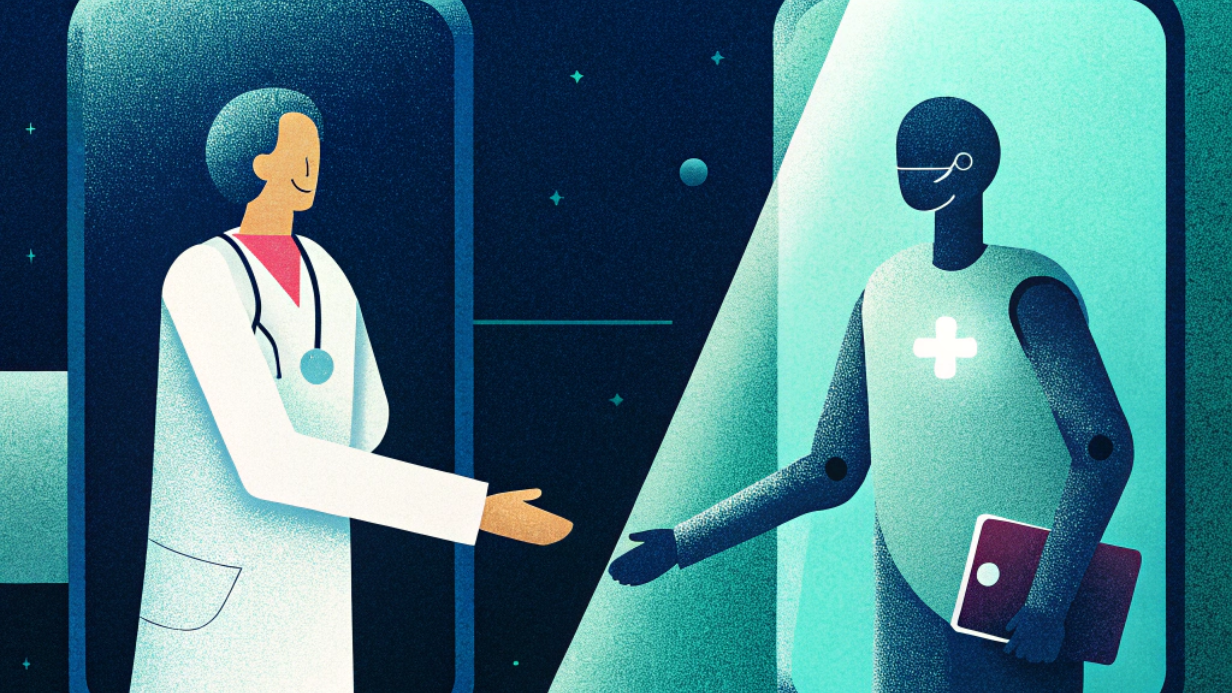
The goal of AI in healthcare was never to replace doctors.
It’s to give one doctor the analytical power of a hundred.
To catch what human eyes miss at 3am. To free clinicians from paperwork so they can do what only humans can do — sit with a patient, listen, and care.
The world needs the solutions being built right now in this space.
Build them well.
See you next Monday. — Rajee
Rajee Hari | Founder, Protean Med www.proteanmed.com | rajee@proteanmed.com
#HealthcareAI #DigitalHealth #MedTech #MondayMorningCoffee #HealthcareStaffing #ProteanMed